Systems thinking + personal finance

Notes from the
budget lab.

Curious dispatches on budgeting, productivity, and the systems that connect both. Written for the analytically-minded person who suspects their money problems are actually systems problems.
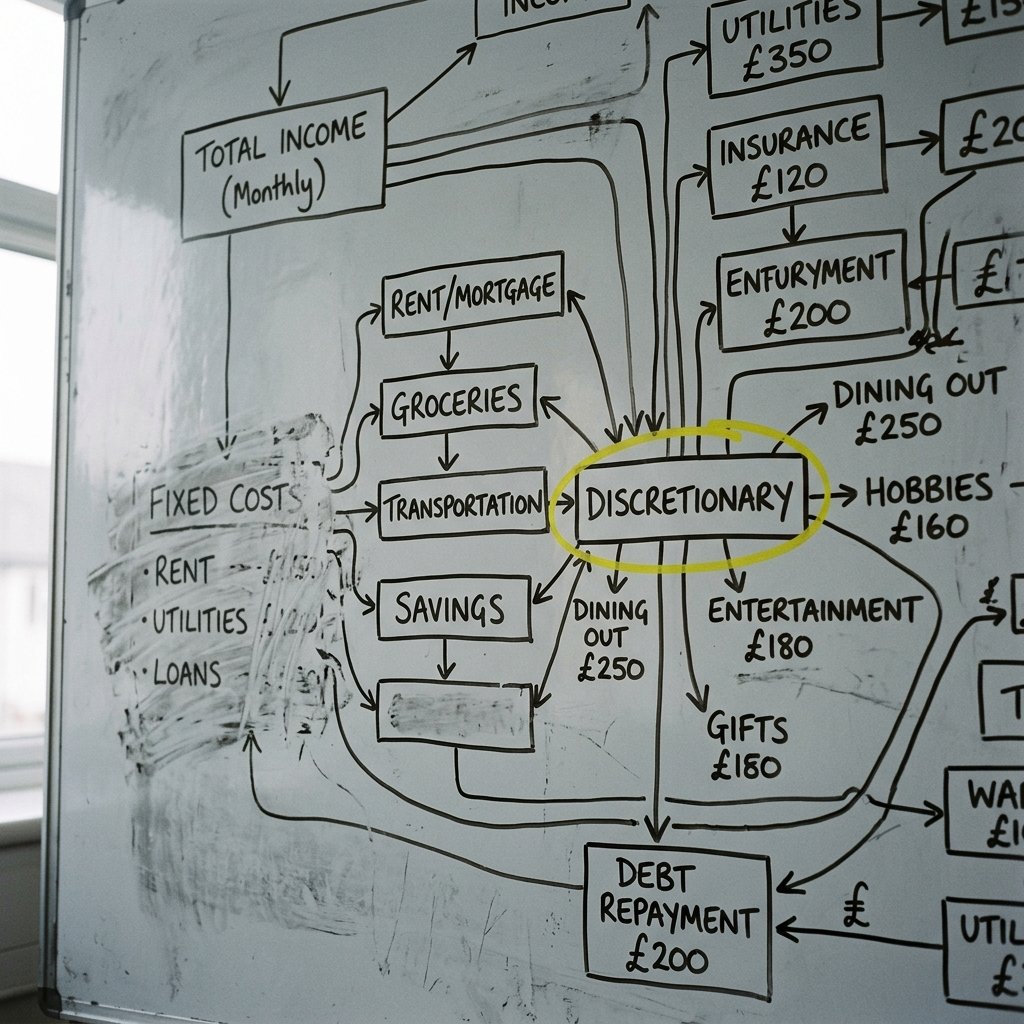

Close-up of a whiteboard covered in budget diagrams and system arrows

01 / A note from the lab

Every budget system I tried failed for the same reason: it treated money as a counting problem. Count what comes in, count what goes out, stay in the green. But money is not a counting problem. It is a systems problem, and systems problems need systems thinking.

I started Brain Budget Lab to write about the overlap — where cognitive science meets cashflow, where productivity frameworks apply to savings rates, where the same mental models that make teams work also make households work. It is a slightly nerdy newsletter. That is the point.

No one who subscribes is looking for permission to be curious. They already are. This is for them.

02 / Core hypotheses

What we keep testing.

H-01

Budget friction is a design flaw, not a willpower deficit

Every time a budget system is abandoned, there was a friction point that was never addressed. Redesign the system, not the person.

H-02

Cognitive load is the hidden cost of every financial decision

When your brain is full, it spends carelessly. Reducing decision fatigue around money is as useful as reducing actual spending.

H-03

Productivity systems and savings systems share the same failure modes

Over-engineering, perfectionism, restart cycles — they appear in GTD and in personal finance. The same fixes tend to work.

H-04

The best budget is the one that disappears into background process

If you are thinking about your budget, it is not working yet. The goal is automatic, low-maintenance, sustainable signal generation.

From the whiteboard.

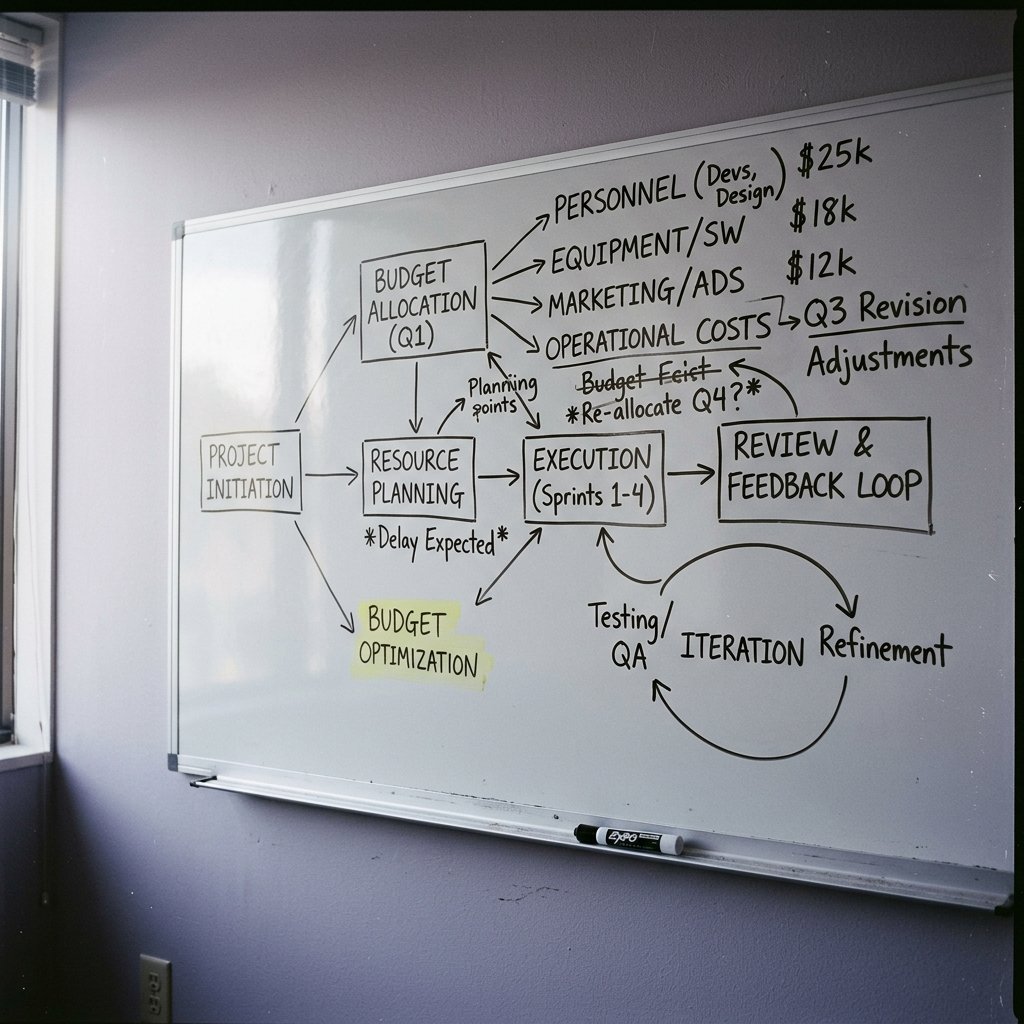
Whiteboard with hand-drawn systems diagram, budget flow arrows, and handwritten labels
The budget that works is not the most detailed. It is the one with the fewest decision points — and none of them at the moments when your willpower is lowest.

— Brain Budget Lab, Issue 12

03 / Recurring themes

What the lab returns to.

T-01

Systems Budgeting

Treating the household as a system, not a spreadsheet

Feedback loops, lag indicators, the difference between a constraint and a rule.

T-02

Cognitive Economics

How thinking patterns drive spending patterns

Decision fatigue, anchoring, temporal discounting, and how to use them.

T-03

Productivity Crossover

What GTD and Kanban can teach us about cash flow

Capturing, reviewing, archiving — applied to budget categories, not task lists.

T-04

Low-Overhead Saving

Automation, defaults, and the art of getting out of your own way

The research on automatic savings and how to actually implement it without a finance degree.

In the field.

A tidy desk with notebooks, a mug, and a laptop showing a budget dashboard
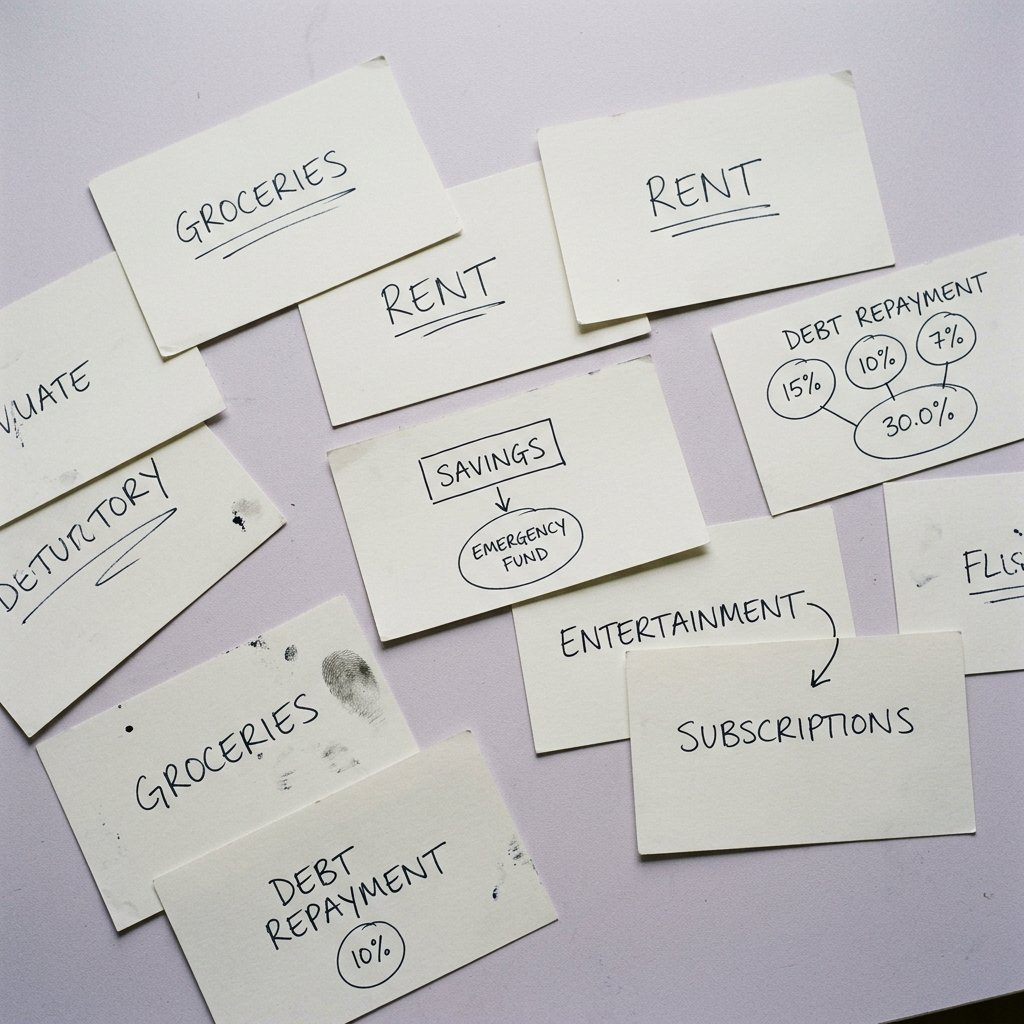
Index cards with handwritten budget categories spread out on a light surface

From the notes file

> input: monthly spending — category: “miscellaneous”

> observation: “miscellaneous” category always overspends

> hypothesis: vague category = vague spending decision

> intervention: rename + split into 3 specific categories

> result: overspend dropped 60% in month 1

> the category name was the problem, not the amount

04 / Past dispatches

Issue 18

Why your brain hates your budget (and what to do about it)

May 2026
Issue 17

The constraint experiment: tracking only three numbers

Apr 2026
Issue 16

Applying the two-minute rule to financial admin

Mar 2026
Issue 15

Feedback loops in household finance: what the research says

Feb 2026
Issue 14

When a productivity system and a savings system are the same system

Jan 2026
Issue 13

The “minimum viable budget” as a design constraint

Nov 2025
Most people redesign their budget. Rarely do they redesign the conditions under which the budget has to operate. That is the actual problem.

— BBL Issue 9

05 / How the lab works

The method behind the dispatches.

Step 01

Observe a pattern

Something recurring shows up: a category that keeps overspending, a decision that keeps getting deferred, a habit that keeps breaking at the same point. That observation becomes the seed of a dispatch.

Step 02

Form a hypothesis

Every dispatch starts with a testable hypothesis — not a claim, not advice, but a structured question. What is the underlying mechanism? What would have to be true for this to change? Is there a systems-level explanation?

Step 03

Read the research

Not productivity content or personal finance blogs. The primary literature — behavioral economics papers, cognitive science, organization research. The lab reads slowly, takes notes in a structured format, and does not publish until the reading is done.

Step 04

Translate, do not simplify

The goal is to bring the rigor of the research into a readable format without losing the nuance that makes the finding useful. Simplification is a lie you tell for speed. Translation preserves the mechanism while removing the jargon.

06 / From the inbox

What subscribers say.

“I have read everything there is to read about budgeting. Brain Budget Lab is the first place that explained why I keep abandoning my budget — not the what, the why. That distinction matters more than I expected.”

— Priya N., Chicago, IL

“Issue 11 changed the way I think about decision fatigue in the context of money. I sent it to three people. That does not happen with newsletters.”

— Marcus T., Austin, TX

“I use GTD for everything in my life except money, because no one had ever made the connection properly before. Now it is obvious. The lab changed that for me.”

— Claire D., Seattle, WA

07 / A note on scope

Brain Budget Lab is not a budgeting tool. It does not help you set up a spreadsheet or choose an app or decide between the envelope method and zero-based budgeting. Those are fine things, and there are many resources that cover them well.

What the lab is interested in is the layer beneath the tool — the cognitive and systems-level forces that determine whether any tool works for a given person in a given context. Two people can use the same spreadsheet template and have completely different outcomes. The difference is not the spreadsheet. The lab is interested in the difference.

Dispatches go out when an experiment yields something worth reporting. The lab does not publish on a schedule. Schedules create incentives to fill space rather than share findings. When there is something real, it will arrive. When there is not, the inbox stays clear.

08 / Recommended reading

Books and papers the lab returns to.

01

Thinking, Fast and Slow — Kahneman

The foundational text for understanding why human decision-making diverges from rational models. Required reading before any conversation about budget behavior.

02

Scarcity: Why Having Too Little Means So Much — Mullainathan & Shafir

The cognitive-bandwidth model of poverty and tight budgets. Changes how you think about why people make poor financial decisions under pressure — and what to do about it.

03

Getting Things Done — Allen

Read not as a productivity system but as a model for externalizing cognitive load. The same principles apply to financial maintenance — with surprisingly direct translation.

04

The Fifth Discipline — Senge

Systems thinking at the organizational level, with tools (feedback loops, archetypes, mental models) that apply directly to household financial systems.

05

Nudge — Thaler & Sunstein

The architecture of defaults. If you want to change financial behavior without relying on willpower, this is the book. Default choices are the most powerful budgeting tool that nobody uses intentionally.

09 / What makes this different

Most financial content is either data (here is your spending breakdown) or motivation (you can do this, just follow these five steps). Brain Budget Lab is neither of those things.

The dispatches are analytical. They ask mechanistic questions: why does this behavior pattern persist? What would have to change for the outcome to change? What does the research say about the underlying cognitive process? These are not rhetorical questions. They are the actual questions the dispatch tries to answer.

The lab is also genuinely interdisciplinary. A dispatch about spending behavior might draw on behavioral economics, cognitive science, organizational theory, and behavioral design in the same argument. That is not showing off. It is what the problem requires. Money behavior does not respect disciplinary boundaries, and the analysis should not either.

If that sounds like something you would read, subscribe. If it sounds like something you would forward to someone else after reading, subscribe and forward it. The lab grows one curious person at a time.

Free dispatches

Enter the lab.

Dispatches on budgeting, systems thinking, and the curious overlap of both. Free. No fixed schedule. Sent when the experiment yields something interesting.